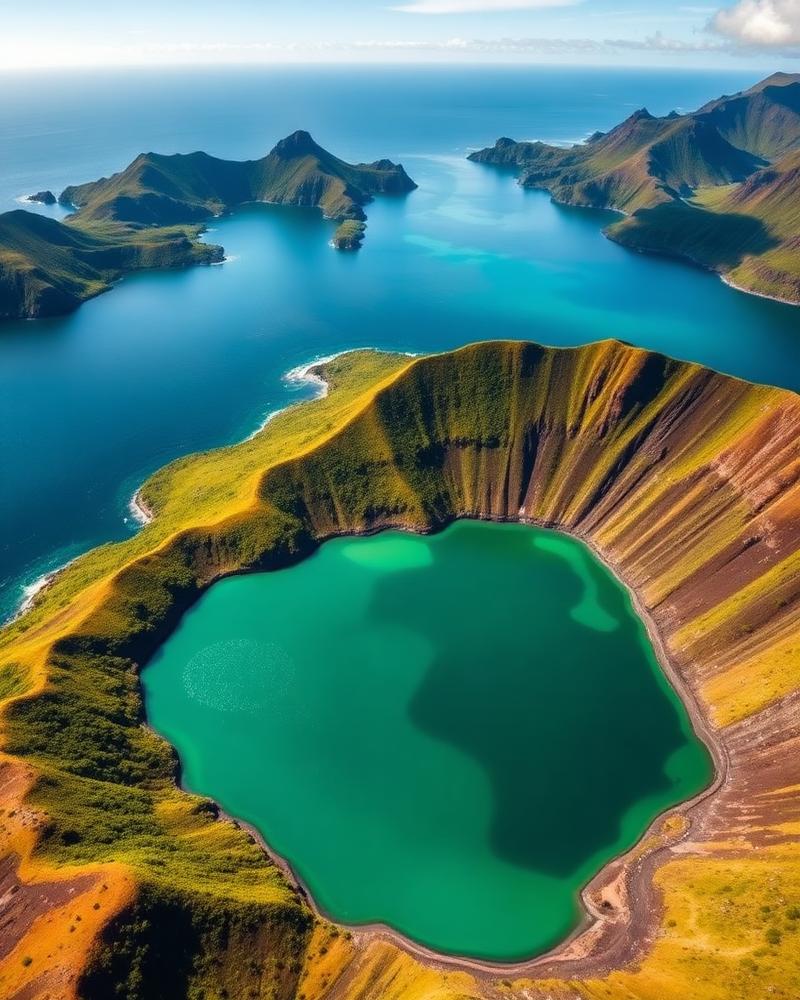
Some destinations you visit with a neat checklist of attractions, tick them off and move on. The Azores are exactly the opposite. This is the kind of place where you head out in the morning with three pins on the map and only reach one of them, because along the way you stopped at five viewpoints, found a natural pool, wandered into a small village, and at some point decided the sunset mattered more than any of your plans.
Add lakes inside volcanic craters, hot springs spilling into the ocean, whales and dolphins, hiking trails, surfing, local wine and endless green — and you get a destination that is hard to believe isn't on everyone's list yet.
The islands belong to Portugal but sit deep in the Atlantic, and it's worth knowing in advance that this is not a lie-on-the-beach destination. The best way to travel here is to rent a car and simply drive. Public transport is fairly limited, a car gives you total freedom, and in the Azores that freedom matters especially, because many of the most beautiful spots are found between the places you planned to visit.
Something else you learn quickly: the weather does whatever it wants. You can be standing in sunshine while the viewpoint you waited all day for, on the other side of the island, sits inside a cloud. That's why one of the most useful tools on the trip is LiveCam Azores, which lets you check real-time visibility across different areas and viewpoints. Sometimes it's simply worth flipping your day around to follow the clouds.
Two more things worth turning into a habit: always keep a swimsuit in the car, because you never know when you'll find a hot spring or natural pool you want to jump into; and if you're driving around the towns, pay attention to where you park. Parking fines are probably the least charming souvenir you can bring home from the Azores.
And if you travel with a drone, these islands are a playground for aerial photography — just check the flight restrictions and rules for each area in advance.
Starting with São Miguel
If you have to pick one island to start with, it's probably São Miguel. It's the largest and most varied, and it has almost everything people come to the Azores for.
One of the first places to aim for is Sete Cidades, perhaps the view most associated with the whole archipelago. Inside a huge caldera sit two lakes — one blue, one green — surrounded by roads and viewpoints that make you stop again and again.
There's no real need to pick just one viewpoint. Drive around the area, stop wherever it looks beautiful and give yourself time. But if there's one spot I wouldn't skip, it's Miradouro da Boca do Inferno. It takes about half an hour on foot to reach, and when the weather cooperates you get one of the most beautiful photos of the trip.
And this is exactly where the webcam tip comes in: don't drive an hour to look at a cloud. Check the LiveCam first.
Not far from there is another of São Miguel's great landscapes — Lagoa do Fogo. A lake inside a volcanic crater, surrounded by green hills and hiking trails. You can simply stop at the viewpoints and enjoy the scenery, or turn the area into half a day or more and take a trail.
But São Miguel isn't only lakes and viewpoints. One of the most special places on the island is Ponta da Ferraria, where a hot spring meets the ocean. At the right time you can get into the water and feel the mix of the cold Atlantic and the warm water coming from the volcanic activity. Check the low-tide times in advance, as they make a big difference to the experience — and if you're already there, try to time it near sunset.
On the other side of the island waits Furnas, a place that constantly reminds you that you're walking on volcanic ground. Steam rises from the earth, hot springs are everywhere and the whole landscape feels like someone turned up the saturation on the color green. If you want to use the thermal baths, book a ticket in advance rather than showing up at the last minute.
For a more active day, it's worth heading to Faial da Terra and taking a trail in the area. It's the kind of hike where you walk through dense vegetation, pass waterfalls along the way and feel for a moment much closer to a jungle than to Europe. Give this area the time it deserves instead of squeezing it between four other attractions.
And among all that nature, leave time for the ocean too. A surf lesson is one of the most fun activities you can add to the trip, even if you've never stood on a board.
And what do you eat after a day like that? Meat lovers should note Associação Agrícola and Casa do Bife O Galego — go early, it tends to fill up. 4 Plátanos Café is a good option for meat and fish, and if after a few days of Portuguese food all you want is pizza, Nonna's makes excellent Neapolitan pies.
Honestly though, on São Miguel I'd deliberately leave a few meals unplanned. Just drive, wander and stop wherever looks good.
Then you reach Pico — and the pace changes
If São Miguel feels like an island that has everything, Pico feels far more focused. You see the mountain from almost everywhere, the villages are smaller, the landscape is more volcanic and the ocean is always present.
And at the center of it stands Mount Pico — the highest mountain in Portugal.
Climbing to the summit isn't just another trail you do along the way. It's a full day and you need to arrive prepared. It's best done with a guide, and among the companies operating in the area, Go Climb Pico is worth checking.
One special option is to start the climb in the afternoon, around 3pm, and build it around sunset. If you go for it, don't let the relatively cool weather fool you — the sun is strong, so sunscreen is a must.
But Pico is definitely not only the mountain.
The island is also famous for its wine, and it's worth dedicating a few hours to a winery visit. The vineyards here look nothing like what most of us picture when we hear "wine region": the soil is black and volcanic, the vines grow between stone walls and everything is surrounded by ocean. There's also a wine museum on the island, but if time is limited I'd choose a winery visit with an explanation and a tasting of the local wines.
And then comes one of the main reasons to visit Pico — the ocean.
This is one of the best places in the region to go whale watching, swim with dolphins or dive. If you're visiting both São Miguel and Pico and only want to do one whale-watching trip, I'd save it for Pico.
CW Azores is a company worth checking, but for ocean activities it's best to book in advance rather than wait until the last day.
A short ferry hop to Faial
One of the conveniences of Pico is that you can add another island to the trip with almost no effort. A short ferry ride and you're in Faial.
It's a great way to add variety to the itinerary without another domestic flight, and in my view a day or two in Faial fits perfectly for anyone already on Pico.
You don't have to turn every island into a project. Sometimes the whole joy is simply taking the ferry, having a slower day and seeing another side of the Azores.
Terceira — a slightly different side of the Azores
After a lot of wild nature, Terceira feels a little different. There are still volcanic landscapes, green and cliffs, but there's also more room for towns, food and local atmosphere.
One of the island's main highlights is Angra do Heroísmo, a city that's simply fun to wander without any particular plan. Beautiful streets, colorful buildings, cafés and an atmosphere that feels a bit more "Portugal" compared to Pico's wild scenery.
Once you leave the city, you're back in nature very quickly.
Miradouro de Alagoa is one viewpoint worth stopping at, and so is Miradouro da Ponta da Queimada. At Furnas do Enxofre you can walk through a geothermal landscape with steam rising from the ground, and Lagoa da Falca is another pretty stop to fit into the day.
It's also worth going up to Pico do Facho, which offers a great view over Praia da Vitória and its surroundings.
In the evening, if you feel like something different, The Texan is an American-style restaurant that pleasantly surprised us. For a more local experience, Larica is a family-run grill house with fair prices and good local wines.
And one more island worth remembering
Flores is the island that stays on the list for next time. It's considered one of the most beautiful in the Azores, especially for nature lovers — waterfalls, lakes, cliffs and endless green.
If you have a longer trip and want to go a little beyond the classic route, it's definitely worth looking into adding it.
So how much time do you really need?
If you want to feel the islands rather than race between them, I'd give 3–5 days to São Miguel, 2–4 days to Pico, a day or two to Faial and 2–3 days to Terceira.
In a single week I wouldn't try to squeeze in four islands. Better to pick one or two and get to know them properly. With around 10–14 days you can build a route that combines several islands and still leaves room for changes.
And this is maybe the most important thing to know before you arrive in the Azores: don't build too packed a trip.
The Azores are not a place where you need to see it all. Quite the opposite.
Leave room for the day the clouds make you change plans, for the road you spot by chance and decide to turn onto, for the hot spring you didn't know existed, for the restaurant you find along the way and for the viewpoint that makes you stop the car even though you already stopped four times in the last twenty minutes.
Because in the end, the places you planned to visit will be wonderful — but in the Azores, very often the road between them is the best part of the trip.